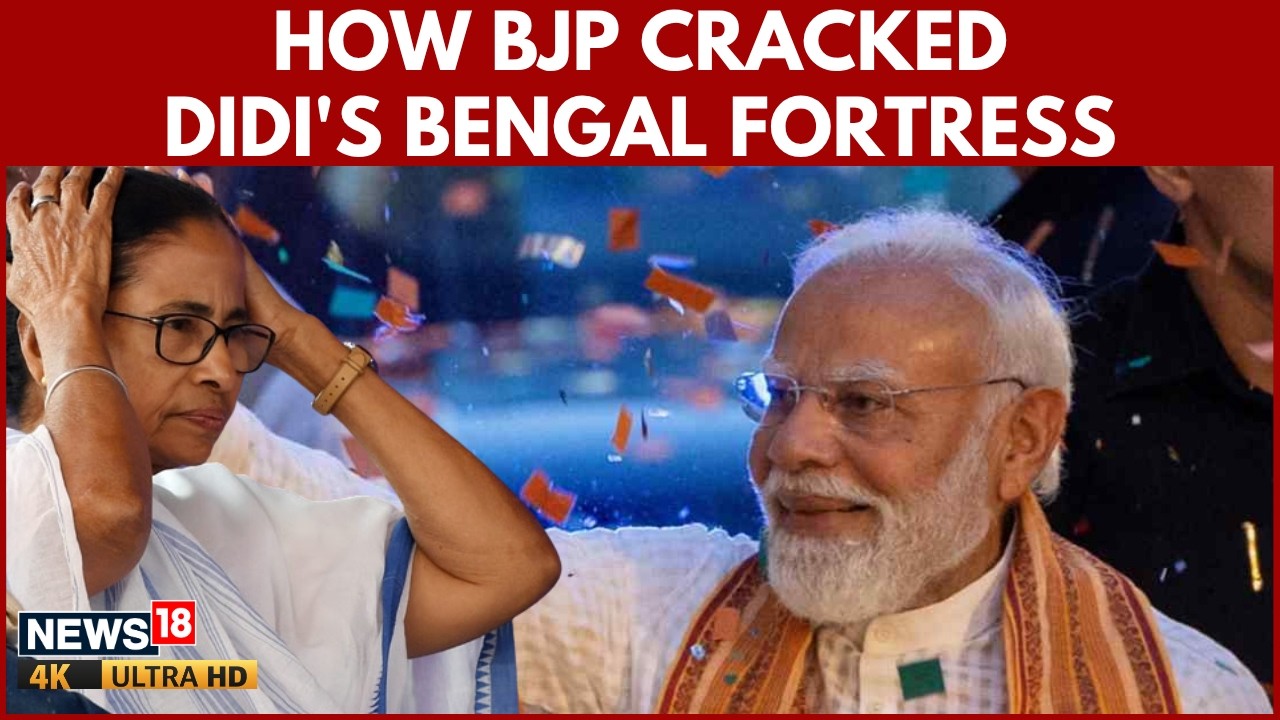
#India Prime Minister Narendra Modi’s ruling BJP is set to a new level, support by almost all India
#Result in key Indian state is set to have significant implications for the country’s political landscape
#Modi’s BJP conquers Bengal, one of India’s toughest political frontiers
For years, India’s West Bengal state was the great exception to Narendra Modi’s political advance.
Bharatiya Janata Party (BJP) had swept through India’s Hindi-speaking heartland, expanded into the west and north-east, and overwhelmed once-formidable regional rivals. Yet Bengal – argumentative and steeped in a self-image of cultural exceptionalism – remained stubbornly resistant.
4th May, 2026. (Monday’s) BJP victory there would rank among the most significant breakthroughs of Modi’s 12-year reign. It is not merely the defeat of a three-term incumbent, but the completion of the party’s long march into eastern India.
“Winning Bengal is a big victory for the BJP – a land of promise that has long eluded its grasp,” says author and journalist Nilanjan Mukhopadhyay.
Narendra Modi’s party has won a resounding election victory in West Bengal, a state which had been a rare opposition stronghold, expanding his unrivalled consolidation of power across the country.
It is the first time that the Indian prime minister’s Bharatiya Janata party (BJP) has won assembly elections in West Bengal, a large and politically significant state in eastern India.
Over the past 15 years, the state had been ruled by Trinamool Congress (TMC), a key opposition party, under the leadership of Mamata Banerjee, their female chief minister. Banerjee had been one of the most outspoken critics of Modi and his religious nationalist agenda over his 12 years in power.
But in a result that will have significant implications for India’s political landscape and deal another demoralising blow to the already weakened opposition, the BJP looked set to win more than 205 out of 294 seats in Bengal’s state assembly, a landmark majority.
Modi said in a statement the West Bengal assembly elections “will be remembered forever. People’s power has prevailed and BJP’s politics of good governance has triumphed. I bow to each and every person of West Bengal.”
The victory in West Bengal, which had been a longstanding ambition for the BJP, furthers the Hindu nationalist party’s unfettered control over state and central governments in India, as it expands its influence over the eastern part of the country.
Since Modi became prime minister in 2014, the BJP’s dominance over politics, and the reach of its political agenda, which seeks to remake India into a Hindu rather than secular country, has continued to grow; while the opposition has been fractured and divided by infighting.
On Monday, the BJP was also re-elected in the eastern state of Assam, giving the party power in 20 out of 28 states.
The result followed a highly controversial exercise by the BJP government to revise West Bengal’s electoral roll, under the guise of “purging” it of illegal voters. As a result of the project, called a special intensive revision (SIR), more than 2.7 million voters were removed from the vote register. Analysis showed that Muslims and other minorities – who traditionally do not support the BJP – were disproportionately targeted.
People walk through a road decorated with the flags of Bharatiya Janata Party (BJP) and Trinamool Congress party ahead of the West Bengal state elections.
Millions in India stripped of vote before critical state election, as government seeks to ‘purify’ electoral roll
Read more
Many had not been allowed to challenge their expulsion in time for the polls. Critics and TMC leaders alleged the SIR exercise was an attempt by the BJP to skew the election in their favour, which was denied by the government.
Rahul Verma, a fellow at the Centre for Policy Research in Delhi, said the BJP’s win in West Bengal was the culmination of a “seven-year project” by the party leadership and cadre.
He cited anti-incumbency and a strong dissatisfaction with TMC, and its interference in daily life, as a critical factor that lost it votes. He said BJP had run a much smoother campaign than in previous years, when it had previously been criticised as “outsiders” who threatened the Bengali cultural and linguistic identity.
“The BJP had a strong and well organised presence in West Bengal and Modi is seen as a charismatic leader,” said Verma. “This kind of result also wouldn’t have happened without a consolidation of the Hindu vote.”
I found your weblog web site on google and verify a number of of your early posts. Proceed to keep up the superb operate. I just further up your RSS feed to my MSN News Reader. Searching for forward to studying extra from you in a while!…
As a casual gamer looking for a quality platform this site really stands out. The game variety is fantastic and the customer support responds quickly on chat. Definitely my go to spot for evening entertainment. Try it now calientecasinomx
I have tried quite a few platforms over the years and this one stands out for its genuine fairness and quick response from support. I always feel comfortable here and the live dealer games are surprisingly smooth. Perfect for anyone who wants a trustworthy gaming environment. helabetlogin
Finally a resource that understands what Aussie punters actually need. The payment guides are spot on and the site verification is rock solid. I love how they highlight casinos that actually process PayID transactions without hidden fees. Makes my deposit and cashout routine so much simpler. payidcasinosaustralia
Do you mind if I quote a couple of your posts as long as I provide credit and sources back to your blog? My blog is in the very same area of interest as yours and my visitors would really benefit from some of the information you provide here. Please let me know if this alright with you. Thanks a lot!
Really impressed with the variety of games here. It feels very secure and the bonuses are actually generous. Big thanks to krsos888.
I’ve been trying a few different sites lately, but the interface here is just so smooth. Definitely my new favorite spot to hang out and play. Check it out at kcwin97