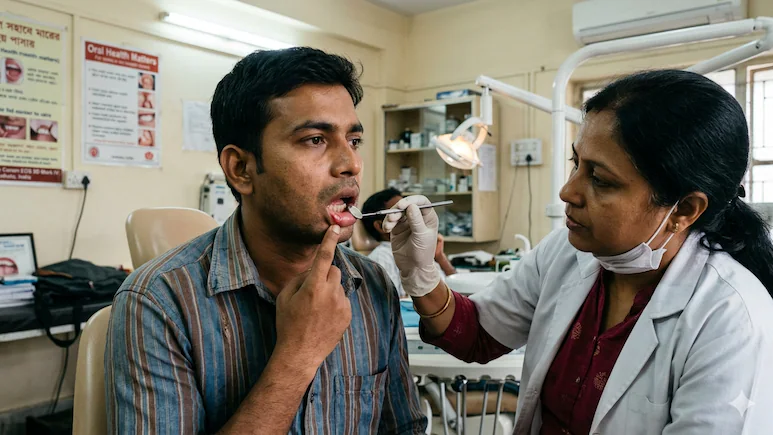
Clinical observations show that a number of oral cancer cases begin as seemingly harmless ulcers that remain unaddressed in the early phase.
In routine practice, patients are frequently seen presenting after several weeks of ignoring a persistent oral sore. By the time medical advice is sought, the disease has often progressed beyond the initial stage. This time gap has a direct bearing on treatment outcomes. Early-stage Oral cancer is usually confined and can be managed with limited intervention. In contrast, advanced disease involves deeper tissues, regional lymph nodes, and may extend further, making treatment more complex and recovery more prolonged.
Oral cancer continues to be influenced by well-established risk factors that are widely prevalent.
- Tobacco use in both smoking and smokeless forms
- Alcohol consumption
- Infection with Human Papillomavirus
- In addition, certain conditions contribute to increased risk over time:
- Poor oral hygiene
- Nutritional deficiencies
- Chronic irritation within the oral cavity
- Exposure to environmental pollutants
The presence of one or more of these factors increases the likelihood of malignant transformation, particularly when early signs are overlooked One of the challenges with oral cancer is that early lesions are often painless and do not interfere with routine activity. This leads to delays in seeking care. Despite the absence of discomfort, certain symptoms warrant attention when they persis
- A non-healing ulcer in the mouth
- White or red patches over the tongue or inner lining
- A lump or hardened area within the mouth
- Unexplained bleeding
- Difficulty in swallowing
- Noticeable changes in voice
Such findings are not always cancerous, but they require timely examination to exclude serious pathology.
If left untreated, a persistent oral sore may progress in a predictable manner. The lesion can gradually invade surrounding tissues, including muscle and bone. In later stages, involvement of lymph nodes in the neck is common. Spread to other parts of the body may occur in advanced cases. This progression is associated with increased morbidity, functional limitations, and a measurable impact on survival.
Another concern is the use of over-the-counter treatments without proper evaluation. Topical applications and symptomatic remedies may temporarily reduce discomfort, but they do not address the underlying cause. In some cases, they delay diagnosis by masking visible changes in the lesion.
Certain measures remain important in reducing the burden of oral cancer and improving outcomes.
Timely evaluation
Any oral lesion that persists beyond fourteen days requires clinical assessment. Early detection allows for intervention at a stage where disease control is more achievable.
Risk reduction
Cessation of tobacco use and moderation of alcohol intake are essential steps in lowering risk. Addressing these factors has a direct impact on incidence.
Screening
Periodic oral examinations are beneficial, particularly for individuals with known risk exposures. Regular screening supports early identification of suspicious changes.
Avoidance of self-medication
Unsupervised use of over-the-counter treatments may delay appropriate diagnosis. Persistent symptoms should be clinically evaluated rather than managed symptomatically.
The pattern of delayed presentation remains a consistent finding in Oral cancer cases. Lesions that appear minor at onset but are left unattended for weeks often account for a significant proportion of advanced diagnoses. Early-stage disease is associated with better control and fewer long-term complications, whereas late-stage disease requires more extensive treatment with wider impact on daily function.
A non-healing oral sore is not always benign. Persistence beyond a limited period requires attention, regardless of associated pain or discomfort. Timely recognition and evaluation continue to influence both the extent of disease and the outcomes of treatment.


Thank you for sharing excellent informations. Your web site is very cool. I am impressed by the details that you have on this blog. It reveals how nicely you understand this subject. Bookmarked this website page, will come back for extra articles. You, my friend, ROCK! I found simply the information I already searched all over the place and just couldn’t come across. What a great site.
Finally found a site that doesnt lag during peak hours. The login is quick and everything just works perfectly. sanur999login
Best gaming experience I’ve had in a while! The interface is very friendly for beginners and the bonuses are generous. Love playing on yono777games during my break.
I love how I can bet anytime and anywhere. The 24/7 availability is perfect for my schedule and the odds are quite competitive. kr247bet