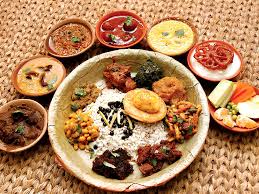
The backbone of Nepali cuisine is Dal Bhat — a simple but filling combo of:
Lentil soup (dal)
Rice (bhat)
Vegetable curries (tarkari)
Pickles (achar)
It’s eaten twice a day by many Nepalis and is valued for nutrition and energy.
🥟 Popular Dishes
Momo – Dumplings filled with meat or vegetables, often served with spicy dipping sauce. One of the most loved street foods.
Thukpa – A warm noodle soup popular in colder regions.
Sel Roti – A ring-shaped, crispy rice bread, especially made during festivals.
Gundruk – A traditional fermented dish with a slightly sour taste.
Dhido – A thick porridge made from millet or buckwheat, common in rural areas.
🌶️ Flavors & Ingredients (Nepali food is usually):
Mildly spiced (less oily than many Indian dishes)
Rich in lentils, rice, vegetables, and grains
Enhanced with spices like cumin, turmeric, garlic, ginger, and timur (a unique pepper)
🍵 Drinks
Chiyaa – Spiced milk tea, similar to chai.
Tongba – A traditional fermented drink in eastern Nepal.
Nepal’s villages are heaven to those who want to discover culinary pleasures associated with Nepal. Nepal’s villages feel deeply in love with their kitchen ingredients and village recipes. Nepal’s villages have succeeded to hand down their recipes from their current generations to their next ones.
Such dietary practices in these villages are largely connected to nature itself. It is because the culinary practices of these people are indicative of where they belong because of the availability of seasonal foods. Every dish in this village tastes like it belongs here because of home garden spices or grain from within those lands.
Having meals in these villages is more than eating, although this seems to be the only visible aspect of this experience. These sessions involve the whole community coming together, and they get an opportunity to participate in the preparation and relishing of this particular traditional food, including the ancient ways of preparing momos and dal.

Heard some buzz about baazplay and decided to give it a look. Not bad, not bad at all! Seems like a decent place to unwind and kill some time. Go give it a try! Go here: baazplay
Downloaded the 665betapp the other day. Works pretty well on my phone, much easier than using the website on mobile. If you’re on the go a lot, give it a try: 665betapp.
Bono55, I am intrigued by the bonus offers! The site looks sharp and clean. I’m hoping for some lucky spins here. Fingers crossed! bono55
Just discovered this spot and the mobile experience is incredibly smooth. Deposits go through instantly and customer support actually replies fast. Been trying out the live dealer tables and the dealers are super friendly. Definitely my new go to for quick bets. vnfe8bet
Downloading new games on the go has never been this convenient. The installer is clean and updates arrive automatically so I never miss new features. I recommend this to friends who want quick access to top rated entertainment apps 99oxgameapk
I have been trying out different gaming platforms lately and I must say this one really stands out for its smooth gameplay and fast withdrawals. Every time I log in I feel like I am playing at a friendly neighborhood spot where the house actually listens to its community. Thank you for keeping things fair and fun for us regular players. I will definitely be coming back for more weekend sessions. bb777club
I really wanted to write a small word to thank you for these stunning ways you are posting at this site. My long internet search has finally been paid with really good strategies to go over with my pals. I would tell you that we readers are quite endowed to dwell in a wonderful community with many lovely individuals with good basics. I feel really fortunate to have come across the website page and look forward to some more cool times reading here. Thanks once more for everything.
A very professional setup with a huge selection of tables. I love the atmosphere and the transparency of the games. I will definitely keep coming back to krevocasino.