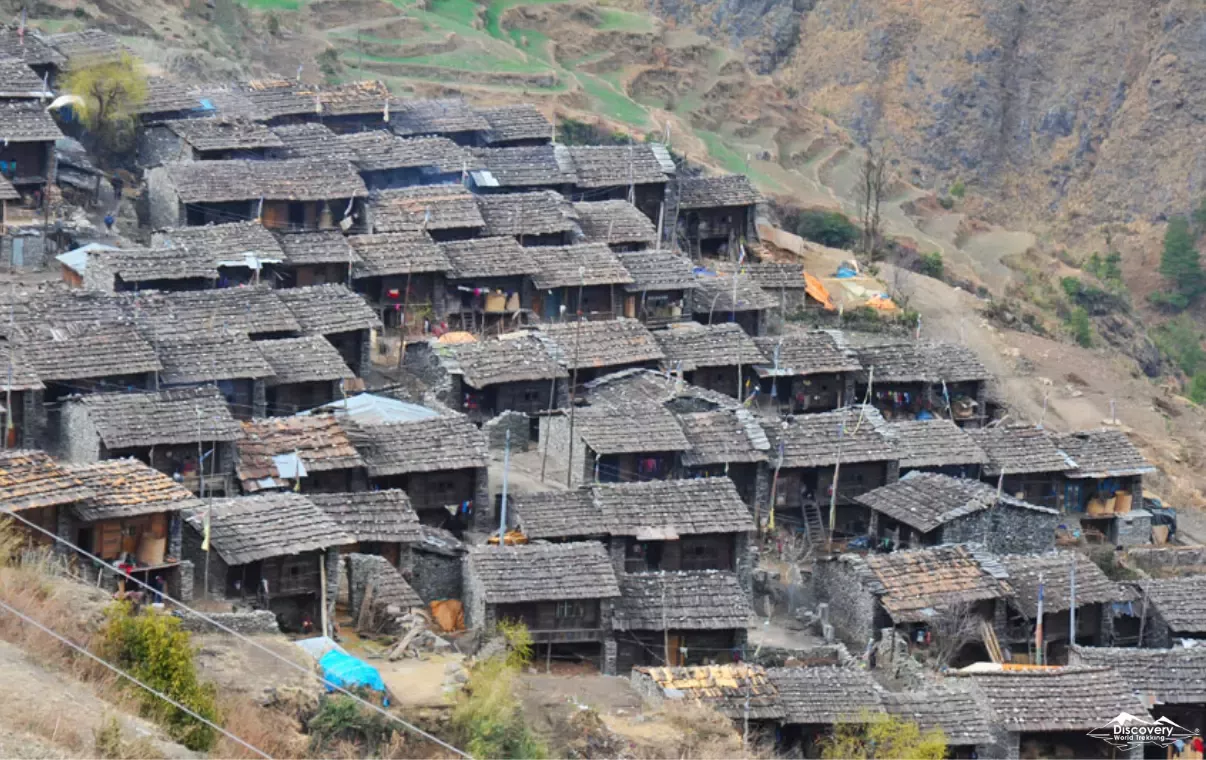
The daily village life of Nepal is directly associated with farming and agriculture. The early rising sun marks the beginning of their day as villagers continue with the work that has been done for generations. This work brings the community together.
A day’s work starts with tending to the animals. The cows, goats, and buffaloes are fed and taken care of since they are a great source of milk and meat for the villagers. After that, the villagers head to the fields, where cultivation is done by using traditional methods in growing numerous crops.They plant rice, wheat, and millet, and harvest vegetables and fruits. Farming in the villages reflects the wisdom and abilities of the ancestors. The use of handmade tools and proper water management plays an important role in the life of rural Nepal.
Daily life in Nepal varies widely between urban areas (like Kathmandu Valley) and rural mountain villages, but some common features stand out:
1. Lifestyle and Community
In many parts of Nepal, especially rural areas, life is community-centered. Families often live in extended households, and neighbors play an important role in social support, farming, and festivals.
In cities like Kathmandu, life is more modern and fast-paced, with access to schools, offices, markets, and technology, though traditional culture still remains strong.
2. Housing and Living Conditions
- Rural homes are often built from stone, mud, and wood, designed to handle mountain climates.
- In the Terai plains (southern Nepal), houses are more similar to North Indian-style brick homes due to warmer weather.
- Urban housing includes apartments and concrete houses, especially in growing cities.
3. Food and Diet
Staple foods include:
- Dal bhat (lentil soup with rice) – the most common daily meal
- Vegetables, potatoes, and seasonal greens
- Dairy products from buffalo or cows
- Meat is eaten less frequently in many rural areas
4. Work and Education
- Most rural families depend on farming and livestock
- Urban residents work in services, government, tourism, and trade
- Education access has improved significantly, but rural schools may still have limited resources
Agricultural Practices in Nepal
Agriculture is the backbone of Nepal’s economy, employing a large portion of the population.
1. Types of Farming Systems
Nepal has three main ecological zones:
- Mountain region (Himalayas)
- Terraced farming on steep slopes
- Crops: barley, potatoes, buckwheat
- Yak and sheep herding are common
- Hill region
- Mixed farming with terracing
- Crops: maize, millet, wheat, rice
- Fruit farming (apples, oranges in some areas)
- Terai plains (southern lowlands)
- Most productive agricultural region
- Crops: rice, wheat, sugarcane, vegetables
- More mechanized farming compared to hills
2. Terraced Farming
One of Nepal’s most important agricultural features is terrace farming, where hillsides are cut into steps to:
- Prevent soil erosion
- Conserve water
- Make steep land usable for crops
This is especially common in the Himalayan and hill regions.
3. Main Crops
- Rice (most important staple crop)
- Maize
- Wheat
- Millet (important in high-altitude areas)
- Potatoes
- Lentils (major protein source)
4. Livestock Farming
Farmers commonly raise:
- Cattle and buffalo (milk, dung for fuel and fertilizer)
- Goats and sheep (meat and wool)
- Poultry in rural and semi-urban areas
5. Challenges in Agriculture
Nepalese agriculture faces several difficulties:
- Small landholdings and fragmented farms
- Dependence on monsoon rains
- Limited irrigation in many areas
- Migration of youth to cities or abroad for work
- Difficult terrain in mountainous regions
Daily life in Nepal is deeply tied to geography and tradition, with strong community networks and a mix of rural and urban lifestyles. Agriculture remains central, especially rice and millet farming, with terraced fields being one of the most distinctive features of the landscape.


Yo, pkr47game just caught my eye. Pretty straightforward platform with a few interesting twists. If you’re bored, give it a looksee. You might like what you see. More at pkr47game
Alright, folks, looking for the lucky505download? Just grabbed it myself. Seems legit! Get yours here lucky505download
Petir108 is alright. Navigation is smooth, which is what I look for. Check it out when ya get a chance: petir108
The bonuses here are actually worth it and not just bait. I managed to win a decent amount yesterday and the withdrawal was surprisingly fast. Big fans of krwinevo54 here.
Great platform with a very secure login process. I feel safe depositing my funds here and the customer support is actually helpful. jilibet888login