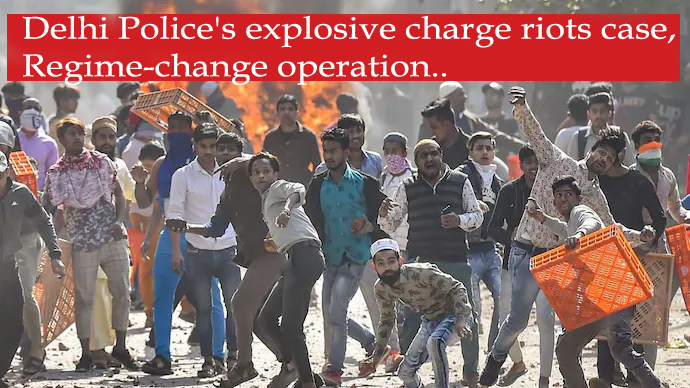
Regime-change operation: Delhi Police’s explosive charge in 2020 riots case
The Delhi Police has prepared an affidavit to be filed in the Supreme Court opposing bail for Umar Khalid, Sharjeel Imam, Meeran Haider, Gulfisha Fatima and others accused in the 2020 Delhi riots conspiracy case. The police claim the violence was part of a planned “regime-change operation.”
News Prakash has accessed details of the exhaustive affidavit finalised by the Delhi Police for submission before the Supreme Court in the 2020 Delhi riots larger conspiracy case.
According to the police, the riots were not spontaneous. In the affidavit, the police have said that it was a carefully planned effort to disturb peace in the country and harm India’s image globally.
This development comes after the Delhi High Court denied bail to Khalid and others in the UAPA case related to the 2020 violence.
The police said they have collected witness statements, documents, and technical evidence linking the accused to a “deep-rooted conspiracy engineered on communal lines.”
The police maintain that the unrest was “designed to strike at the sovereignty and integrity of India” by weaponising dissent against the Citizenship (Amendment) Act (CAA).
NOT SPONTANEOUS PROTEST
The Delhi Police said that the violence was timed to coincide with US President Donald Trump’s visit to India during his first term in office, in a bid to attract international attention and portray the country negatively.
The CAA issue was “carefully chosen to serve as a radicalising catalyst camouflaged as peaceful protest,” the police said.
DELIBERATE DELAY
The Delhi Police have accused the petitioners, including Umar Khalid, Sharjeel Imam, Meeran Haider, and Gulfisha Fatima, of systematically delaying trial proceedings through what it calls “frivolous applications” and “coordinated non-cooperation.”
According to the affidavit, the accused engaged in a “brazen abuse of process” to prevent the lower court from framing charges and commencing trial. The police will argue that the delay in proceedings was attributable to the accused themselves, not to investigative agencies.
WIDESPREAD DAMAGE AND NATIONAL IMPACT
According to the police, the conspiracy led to the deaths of 53 people, large-scale destruction of public property, and the registration of over 750 FIRs in Delhi alone. The materials on record, they claim, suggest attempts to replicate the unrest across India, pointing to a broader, pan-India mobilisation plan.
‘JAIL, NOT BAIL, IS THE RULE’
Invoking the Unlawful Activities (Prevention) Act (UAPA), the Delhi Police state that “jail, not bail” is the rule for such serious terror-linked offences. The affidavit contends that the accused have failed to rebut the prima facie presumption of guilt and that the gravity of the offence prohibits release merely due to trial delay.
Officials have dismissed claims about an unmanageable witness list, clarifying that only 100–150 witnesses are material and that the trial can be concluded swiftly if the accused cooperate.
PLANNED TO DRAW GLOBAL ATTENTION
The police cited evidence, including chat messages referencing Donald Trump, to argue that the riots were premeditated and timed to coincide with his visit. This, the police say, was meant to draw the attention of international media and “globalise” the CAA issue by portraying it as a targeted act against Muslims.
I’ve been playing here for a few weeks now and the interface is super smooth. Fast payouts and no hassle with the login process. Definitely recommend 877jililogin for anyone looking for a reliable site.